
The Lights Are Back. The ‘Power’ Is Not, Says Validation Institute–Validated Benefits Advisor Paul H. Flowers Jr.
After 13 days without electricity at his Gary home, Flowers says many small and midsize employers feel a similar loss
Press Release Disclaimer: This is a press release distributed through the XPR Media network. It has not been independently verified by our newsroom.

After 13 days without electricity at his Gary home, Flowers says many small and midsize employers feel a similar loss of control at health-plan renewal.
GARY, IN, UNITED STATES, August 25, 2026 /EINPresswire.com/ — Thirteen days. That is how long Paul H. Flowers Jr. says his Gary home went without electricity after the Aug. 11 storm.
On Aug. 11, a derecho crossed Northwest Indiana during the late morning and afternoon. The National Weather Service recorded a peak gust of 99 mph at Gary/Chicago International Airport at 11:09 a.m. NIPSCO said outages peaked at about 301,000 that day—more than 60% of its electric customers—and rose to about 317,000 after additional storms on Aug. 12 and 13. NIPSCO’s posted target for substantially completing restoration work in Gary was 11:59 p.m. Aug. 25, although the utility warned that some individual properties could take longer.
Flowers is the founder and CEO of Superior Insurance Advisors. He and his firm appear in the Validation Institute’s directory of validated benefits advisers. He works with small and midsize employers on their health plans. During the blackout, he says, he charged his phone from the front seat of his car.
“I felt powerless,” Flowers said. “I could not find a better supplier. There was supposedly no other option. I sat in a dark house waiting on a restoration date that kept moving, and somewhere in the second week it hit me. This is exactly what my clients feel at renewal. Same helplessness. Different bill.”
A monopoly. Concentrated insurance markets. The same feeling.
NIPSCO is a regulated monopoly utility. Gary customers in its assigned electric service territory cannot choose a competing retail electric utility, and the Indiana Utility Regulatory Commission approves its rates. The IURC’s July 1, 2026, residential-bill survey ranked NIPSCO highest among the eight rate-jurisdictional utilities surveyed, at $225.91 for 1,000 kWh; the survey excluded municipal and cooperative providers. The IURC’s latest reliability report shows that NIPSCO had the longest average outage duration and restoration time when major-event days were excluded, although it was not the worst on every reliability measure.
On Aug. 24, Gov. Mike Braun directed the Indiana Office of Utility Consumer Counselor to file a complaint and ask the IURC to investigate NIPSCO’s storm preparation and response, vegetation-management and right-of-way practices, and whether funds approved through regulatory trackers were used for their intended purposes.
Employer health insurance is not a legal monopoly, but employer-group markets are concentrated in many states. A 2024 U.S. Government Accountability Office report found that, in 2022, three or fewer insurers held at least 80% of enrollment in individual and employer-group markets in at least 35 states. Flowers says the legal distinction can disappear from view when a 40-person company receives its renewal.
KFF’s 2025 Employer Health Benefits Survey put the average annual family premium at $26,993, up 6% from 2024 after 7% increases in each of the previous two years. Among covered workers with single coverage and a general annual deductible, the average was $2,631 at firms with 10 to 199 workers, compared with $1,670 at larger firms.
Federal law generally requires brokers and consultants expecting at least $1,000 in direct or indirect compensation for covered services to an ERISA group health plan to disclose that compensation in writing to the responsible plan fiduciary reasonably before the arrangement is entered into, extended, or renewed. The fiduciary must then evaluate the reasonableness of the compensation and potential conflicts of interest.
“A monopoly does not have to earn your business year after year. It only has to keep it,” Flowers said. “In benefits, an employer can be handed another increase while the broker in the room may also be paid by the carrier being recommended. Nobody writes ‘market concentration’ on the paperwork. Different industry. Same feeling in your stomach.”
In court
On Aug. 17, 2026, attorneys with Allen Law Group filed a first amended complaint seeking class-action status in Porter Superior Court 1, Cause No. 64D01-2608-CT-009189, on behalf of Jack Tipold and several other named plaintiffs.
The complaint alleges that NIPSCO’s negligent vegetation management caused outages that were foreseeable and preventable. NIPSCO strongly disputes that characterization, says its vegetation management spending has more than doubled since 2016, and says it will vigorously defend itself. The allegations have not been adjudicated.
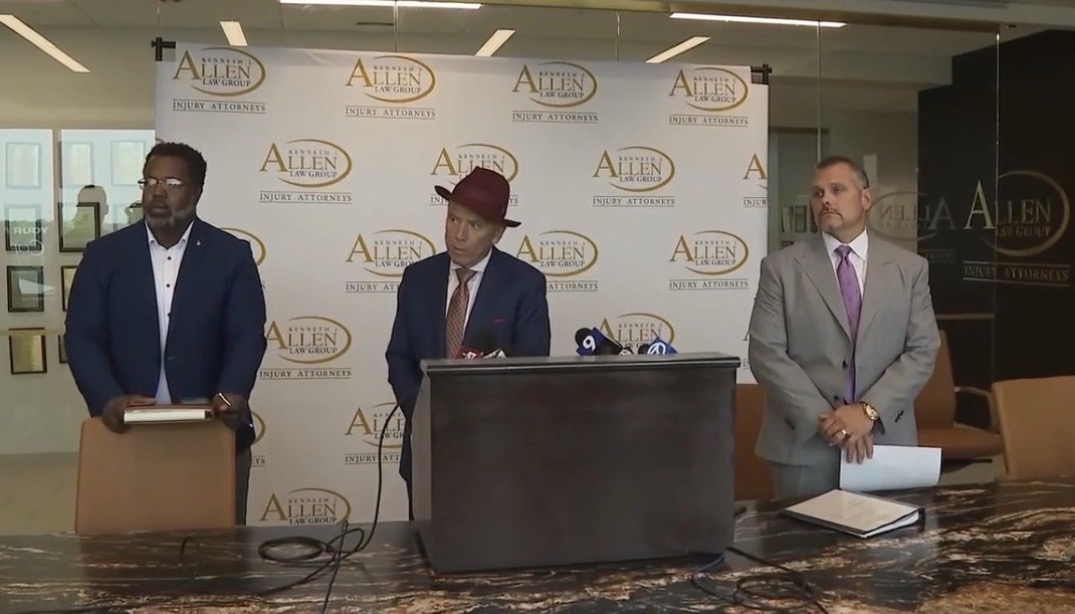
Flowers says he is providing research and consulting support to Allen Law Group on the matter and appeared with its attorneys at an Aug. 21 press conference. The complaint does not list him as a named plaintiff.
“One customer complaining to a monopoly gets a form letter,” Flowers said. “Thousands of customers standing together get a courtroom. Employers in this region should take the hint.”
The one difference
Here is where the comparison breaks. NIPSCO customers cannot choose a competing local electric distribution utility. Many employers, however, have alternatives to a traditional fully insured renewal.
“Employers can look at fully insured, self-funded and level-funded arrangements. They are not interchangeable,” Flowers said. “Size, cash flow, risk tolerance, stop-loss protection and contract terms all matter. But the right arrangement can give an employer more useful plan data, more control over pharmacy-benefit terms and more say over how the adviser gets paid. The powerlessness feels real. The problem is that many employers were never told another path exists.”
Flowers recommends asking a broker three questions before the next renewal:
1. What direct and indirect compensation do you, your affiliates or your subcontractors expect to receive? Who pays it, how is it calculated, and does it change with the carrier or vendor selected?
2. What plan-specific claims or loss-ratio data can you obtain, and what can you document about each component of our premium or plan cost?
3. If your compensation did not vary by carrier or vendor, would your recommendation change? Why or why not?
“If your broker cannot answer all three in plain English,” Flowers said, “you are sitting in the dark and somebody else is holding the flashlight.”
Paul H. Flowers Jr.
PaulHFlowersJr.com
+1 219-302-8118
email us here
Full press conference: Class-action lawsuit filed against NIPSCO, alleges lack of vegetation management
Legal Disclaimer:
EIN Presswire provides this news content “as is” without warranty of any kind. We do not accept any responsibility or liability
for the accuracy, content, images, videos, licenses, completeness, legality, or reliability of the information contained in this
article. If you have any complaints or copyright issues related to this article, kindly contact the author above.

Media gallery
