
Feet Up Carpet Cleaning of Towson Warns That DIY Rug Spot Cleaning Can Cause Permanent Dye Bleeding
Just another WordPress site
Press Release Disclaimer: This is a press release distributed through the XPR Media network. It has not been independently verified by our newsroom.
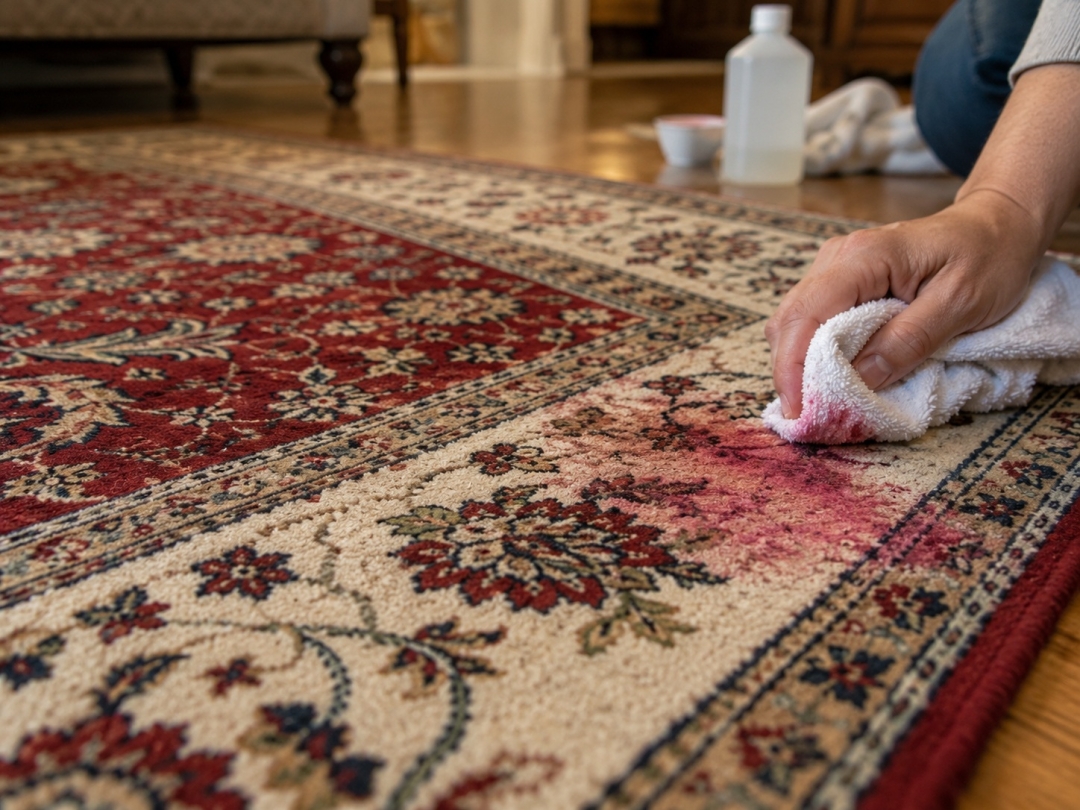

Towson, Maryland – October 13, 2026 – A homeowner tries to remove a coffee stain from an Oriental rug using a household cleaner. The coffee fades, but red dye from the surrounding pattern starts spreading into the cream-colored fibers. A small spill has now caused potentially permanent color damage. Feet Up Carpet Cleaning of Towson warns that improper DIY spot cleaning can cause dye bleeding that professional cleaning may not fully reverse.
A Small Stain Can Become a Much Bigger Problem
Rug dye bleeding occurs when moisture or cleaning chemicals cause dyes to migrate beyond their original boundaries. A white border turns pink. Blue streaks appear across a beige field. Sharp patterns become blurred.
The damage can happen during an ordinary attempt to remove a food spill, pet accident, or drink stain.
Feet Up Carpet Cleaning of Towson provides professional rug cleaning for Oriental, Persian, wool, and synthetic rugs. Each type requires careful consideration of its dyes, construction, and previous treatments.
A rug can survive decades of foot traffic yet suffer visible color damage during a few minutes of careless spot cleaning.
Why Rug Colors Sometimes Run
The dyes used in rug production vary considerably. Some have excellent resistance to moisture and cleaning agents. Others are vulnerable to changes in pH, excessive wetting, or prolonged contact with certain chemicals.
A cleaning solution that removes a stain from synthetic carpet may be unsuitable for a hand-knotted wool rug.
Several conditions can increase the risk of dye migration:
-
Excessive moisture that carries unstable dye into neighboring fibers.
-
Alkaline household cleaners that disturb certain rug dyes.
-
Hot water applied to dyes with poor colorfastness.
-
Repeated rubbing that spreads dissolved color across the surrounding pile.
-
Cleaning chemicals left in the rug after a spot treatment.
-
Slow drying that gives migrated dye more opportunity to travel.
Some rugs have unstable dyes even in their original condition. Others become vulnerable following years of sunlight exposure, spills, or previous cleaning treatments.
A surprisingly small amount of migrating dye can spoil a large section of an intricate pattern.
The Cleaning Product May Be More Dangerous Than the Spill
A bottle labeled “carpet stain remover” can seem suitable for any textile floor covering.
That assumption deserves caution.
Wall-to-wall carpeting and handmade rugs can have very dissimilar dye systems, backing materials, and construction. A product formulated for common synthetic carpet fibers may react poorly with wool or certain rug dyes.
Household products can cause trouble in several ways:
-
Oxygen-based stain removers may alter susceptible dyes.
-
Chlorine bleach can permanently remove color and damage wool.
-
Strong alkaline solutions can disturb certain dyes and affect wool fibers.
-
Excessive detergent can leave residues that complicate subsequent cleaning.
-
Homemade vinegar mixtures are not universally safe for dyed rugs.
The original spill may have been removable with an appropriate treatment. Damage introduced by an unsuitable cleaner can be far harder to correct.
A Rug’s Cream Border Can Reveal the Damage First
Many Oriental and Persian rugs have a combination of dark, saturated colors and pale decorative sections.
A red floral pattern beside an ivory border is particularly unforgiving when unstable red dye starts migrating. Even a small amount of transferred color can become highly visible against the lighter background.
Consider a household accident involving a cream-and-red wool rug.
A drink spills near the edge of a dark red motif. The homeowner repeatedly wets the area and scrubs with a stain-removal product. The original spill grows lighter, but a pink halo begins appearing around the pattern.
The moisture has caused some of the unstable red dye to move beyond the original design. As the rug dries, the displaced color may remain trapped in the lighter fibers.
Further scrubbing can expand the affected area. Repeated applications of cleaner may create an even more complicated problem.
A professional cleaner must now assess two concerns: the original spill and the displaced dye.
How Technicians Check a Rug’s Color Stability
At Feet Up Carpet Cleaning of Towson, a rug’s construction and dye characteristics are important considerations during the cleaning assessment.
The ANSI/IICRC S100 Standard for Professional Cleaning of Textile Floor Coverings addresses carpet and rug characteristics, cleaning chemistry, inspections, cleaning methods, and spot removal.
Color stability is a particular concern for rugs containing rich reds, blues, greens, and other saturated dyes.
A professional assessment may include:
-
Identifying the rug’s fibers and construction.
-
Inspecting light-colored sections for existing dye transfer.
-
Checking for signs of previous spot treatments.
-
Assessing the condition of the foundation, backing, and fringe.
-
Testing colorfastness in a discreet area using an appropriate procedure.
-
Considering moisture levels, cleaning agents, and drying requirements.
A colorfastness test can reveal potential trouble, though it cannot guarantee that every section of a rug will react identically.
Certain rugs contain several dyes with varying levels of stability. A cleaning method suitable for one color may create problems for another.
Dye Bleeding and Color Fading Are Separate Problems
Homeowners sometimes describe any unexpected color change as fading. Technically, dye bleeding and fading involve separate forms of damage.
Fading occurs when color loses intensity, potentially due to sunlight, chemicals, or environmental conditions.
Bleeding occurs when dye moves from its original location and stains another section of the textile.
The distinction becomes important during an inspection:
-
A faded red pattern may appear pale or washed out.
-
Bleeding red dye may leave pink marks across neighboring white fibers.
-
Chemical color loss may produce irregular light patches.
-
Abrasion can change the appearance of a rug’s surface even when the dye remains intact.
Ordinary rug cleaning cannot reliably restore color lost to fading or chemical damage. Correcting dye migration may require specialized treatment, and complete recovery is not guaranteed.
Why More Scrubbing Can Make Things Worse
The natural reaction to a spreading stain is to keep cleaning.
For a rug showing signs of dye movement, that reaction can be costly.
Scrubbing can drive moisture deeper into the pile and spread it across a larger area. On certain handmade rugs, aggressive treatment can disturb the surface fibers or place strain on worn sections.
Another dose of cleaner could trigger an even stronger reaction in the rug’s dyes.
Once dye begins transferring into adjacent fibers, attempting to scrub it away can enlarge the affected section.
At that point, stopping the treatment is generally safer than experimenting with another household product.
What to Do After Noticing Color Bleeding
Feet Up Carpet Cleaning of Towson encourages homeowners to treat unexpected color movement as a warning that the rug may be reacting poorly to the cleaning process.
If red, blue, or another dye begins appearing outside its original pattern:
-
Stop applying cleaning products immediately.
-
Avoid additional scrubbing or brushing.
-
Do not attempt to neutralize one chemical with another household product.
-
Keep the affected area from becoming saturated with more water.
-
Avoid direct heat, including hair dryers and steam appliances.
-
Record the names of any cleaning products already applied.
-
Contact a professional rug cleaner for an assessment of the affected section.
Take a photograph as soon as the colors start running. The technician can use it to assess how far the dye has spread and what happened during the initial cleaning attempt.
Can Professional Cleaning Reverse Dye Bleeding?
Some cases of dye migration can be improved with specialist treatments. The outcome varies according to the rug’s fiber, dye chemistry, degree of migration, and previous exposure to cleaning agents.
There is a considerable distinction between recently transferred dye and color that has already become difficult to remove from neighboring fibers.
A technician may determine that further treatment presents an unacceptable risk to the rug’s remaining colors or construction.
Aggressive attempts to remove transferred dye can introduce new damage, including color loss in sections that were previously unaffected.
For an expensive Persian or Oriental rug, preserving the original design may be more valuable than pursuing complete removal of a minor color bleed.
A Rug Can Be Clean Yet Still Have Permanent Color Damage
Feet Up Carpet Cleaning of Towson emphasizes the importance of establishing realistic cleaning expectations for rugs affected by household products.
Removing soil and correcting damaged dye are separate tasks. Professional cleaning may remove the dirt, but discoloration caused by an earlier treatment can remain.
The company encourages homeowners to have valuable or delicate rugs professionally assessed when stains occur, particularly if the rug has a history of color bleeding or previous chemical treatments.
Coffee can be cleaned out of many rugs. Once unstable dye spreads into a cream-colored border, getting those original colors back becomes a far more difficult task.
About Feet Up Carpet Cleaning of Towson
Feet Up Carpet Cleaning of Towson has provided professional carpet, rug, and upholstery cleaning services in Towson, Maryland, and surrounding Baltimore County communities since 2005. The company’s rug cleaning services cover Oriental rugs, Persian rugs, wool rugs, synthetic area rugs, runners, and other textile floor coverings. Its cleaning practices take rug fibers, construction, dyes, soil conditions, and suitable cleaning methods into consideration, with the ANSI/IICRC S100 Standard for Professional Cleaning of Textile Floor Coverings serving as an industry reference.
Media Contact
Company Name: Feet Up Carpet Cleaning of Towson
Contact Person: Randall Downing
Email: Send Email
Phone: 443-608-5358
City: Towson
State: MD
Country: United States
Website: https://www.towsoncarpetcleaningmd.com/
Press Release Distributed by ABNewswire.com
To view the original version on ABNewswire visit: Feet Up Carpet Cleaning of Towson Warns That DIY Rug Spot Cleaning Can Cause Permanent Dye Bleeding
