A World First, Beacon AI Flies Murdock Its AI Pilot Assistant System Aboard Operational USAF Tankers
Five flights, three airfields, three KC-46A Pegasus aircraft, and approx 20 hours of flight time, under an AFWERX
Press Release Disclaimer: This is a press release distributed through the XPR Media network. It has not been independently verified by our newsroom.
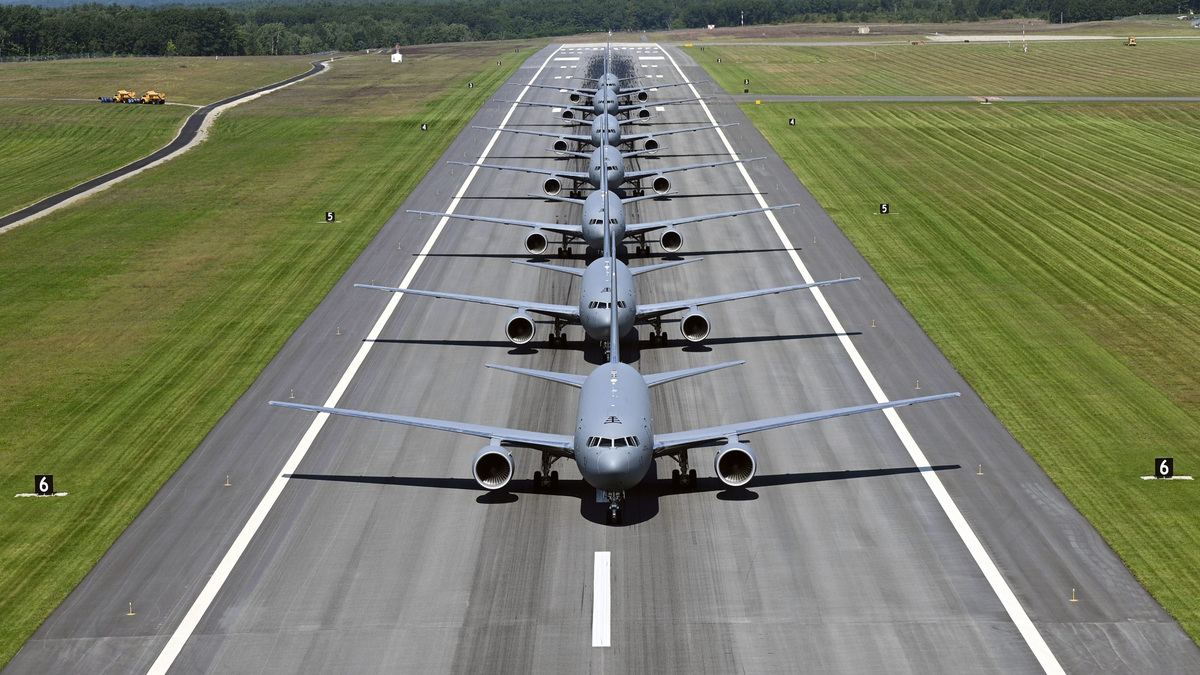

Five flights, three airfields, three KC-46A Pegasus aircraft, and approx 20 hours of flight time, under an AFWERX Tactical Funding Increase with Air Mobility Command
San Carlos, CA (PRUnderground) October 27th, 2026
Beacon AI, a California-based aviation software technology company, announced the flight of Murdock, its AI pilot assistant system, aboard three operational U.S. Air Force KC-46A Pegasus aircraft over five flights and approximately 20 hours of flight time in August and September 2026, under a U.S. Air Force AFWERX Tactical Funding Increase (TACFI) contract with Air Mobility Command (AMC). The flights began during Emerald Flag at Eglin Air Force Base, Florida, and continued at two additional airfields, including a civil airport.
Beacon believes Murdock is the first commercially developed AI pilot assistant system to fly aboard multiple operational aircraft, providing advisory capabilities to aircrews in flight and used without modifying the aircraft’s certified flight-critical systems.
Beacon built its connected aviation intelligence platform to adapt to different aircraft. Murdock is the in-cockpit element: a modular compute and crew-interface system that reads from certified avionics buses, advises the crew, and records every flight. It connects to Lighthouse, Beacon’s cloud-based fleet data platform and web application, via satellite communication. Together, Murdock and Lighthouse generate the data used to build safety and efficiency features for aircraft operators and deploy them directly, turning reactive safety into proactive features.
An operational aircraft, not a testbed
Most advances in AI for aviation to date have been made on dedicated test aircraft, privately or government-owned. Murdock flew on aircraft already assigned to operational units, flown by fleet aircrews, connecting through an interface the Air Force already fields.
Fleet adoption is important for Beacon’s data flywheel; flying the aircraft across multiple aircraft and airfields with different procedures and airspace is the first step. The main push is toward Fleet Learning, where flight data scales, improving features for everyone and making the platform more capable and helpful for operators.
Matt Cox, Co-Founder and CEO, Beacon AI
“The KC-46 flight is a massively important step, as it demonstrates capabilities that can provide value to crews today. The right way to bring a system like this into the cockpit is to do so progressively: put it in the hands of real crews on real missions, build on what it already does well, and expand its capabilities as operational experience and evidence support it. That work should not happen on only one aircraft or one mission set. Each platform can start building experience and delivering value now while contributing to a broader foundation of trust and reliability. And at every stage, the crew retains authority“
Tiffany Robinson, AFWERX Growth Stage Investment Lead
This investment shows how AFWERX uses the Tactical Funding Increase program to align Department of the Air Force funding, matching investment and operational needs to advance promising technologies toward operational use,” said Tiffany Robinson, AFWERX growth stage investment lead. “By supporting capabilities that improve decision-making and operational efficiency, we are advancing the Department of War’s critical technology priorities and the Department of the Air Force’s focus on accelerating capability delivery, modernizing the force and strengthening the industrial base.
Aviation autonomy 2.0 is hardware-lite
The first generation of aviation autonomy inherited many assumptions from self-driving cars: heavy hardware retrofits meant to take over flight control. A second approach has emerged: hardware-lite systems that augment the crew rather than replace or override them, working through software and data rather than actuators and flight controls.
These flights demonstrated Level 2 assistance in Beacon’s framework, where the system advises, and the crew decides. Beacon calls this building R2-D2 for pilots. The governing principle remained the same on these flights: the crew retains authority. This approach aligns with how aviation is likely to modernize flight decks in the coming years, with humans and software working together as teammates.
Aviation’s advances have come through defense first
In the 122 years since the first powered flight, most of aviation’s foundational advances first reached the flight deck through military programs. Jet propulsion, swept wings, pressurized long-range transport, inertial navigation, fly-by-wire, and GPS all entered service on military aircraft before they became standard equipment on airliners. AI pilot assistance is following the same path for the same reason: the military flies the missions with the highest workload and the lowest tolerance for delay.
Path to an operational flight deck
Beacon reached this major milestone under an AFWERX TACFI OTA contract with AMC. This contract followed a SBIR Phase 2 with U.S. SOCOM. Beacon reached this point as a Series A company, having raised more than $20 million in venture capital financing.
Kevin Stamey, Former PEO Mobility Director, Beacon AI Advisor
“Beacon’s recent flights on the KC-46 are not only a huge win for AMC but for the AF. Crewed aviation will remain for decades, yet missions are becoming more complex and longer, putting greater strain on pilots/crews. Beacon’s AI pilot assistant will reduce crew workload, improve mission effectiveness, and make flying safer. These initial flights are just the beginning of an important and overdue capability in the cockpit.”
From two tankers to a fleet
The commercial opportunity starts with a dual-use airframe. The KC-46 is a military derivative of the Boeing 767, and 1,361 767s have been delivered since 1982. The KC-46 integration creates a natural bridge from Air Force mobility aircraft to commercial 767 fleets.
AMC already operates more than 1,000 airlift and aerial refueling aircraft. The Air Force’s officially planned KC-46 buy stands at 263 aircraft. The interface Murdock uses isn’t unique to the tanker, which gives it a path to the rest of the mobility fleet.
The bigger opportunity is the aircraft class, not the type. Roughly 30,300 aircraft are in airline service worldwide today. None of them fly with AI pilot assistance.
Congressional interest
Flight safety has remained common ground for policymakers.
In its report on the Fiscal Year 2027 National Defense Authorization Act, the House Armed Services Committee noted that recent work by the Air Force and Special Operations Command showed that advisory and pilot-assist tools can improve situational awareness and decision-making without taking control of the aircraft. The committee added that such tools could help aircrew without changing certified flight-critical systems or replacing existing avionics, flight controls, or actuators. It directed the Secretary of Defense to brief the committee by February 1, 2027, on the Department’s plan to evaluate and adopt them. [House Report 119-698]
The year before, the same committee encouraged the Navy, the Air Force, and Special Operations Command to prioritize light-hardware AI systems that assist aircrew in flight, citing flight safety and reduced human error. [House Report 119-231, Items of Special Interest]
What comes next
The next step is for Murdock to provide progressive assistance to aircrew throughout the flight lifecycle, from scheduling to debriefing. In Beacon’s view, success depends on repetition and iteration based on user feedback.
Acknowledgments
Beacon acknowledges and appreciates the support of AFWERX, the Air Force Research Laboratory, Air Mobility Command, USSOCOM Science and Technology, U.S. Air Force Special Operations Command, and the 711th Human Performance Wing in reaching this milestone.
About Beacon AI
Beacon AI is a California-based aviation software company building a hardware-lite pilot-assistance platform to make flight safer and more efficient. Beacon’s technology
works alongside commercial and defense aircraft operators and flight crews using a software- and data-focused approach. This assistance-focused approach adds capability without requiring major replacement or redesign of installed avionics or flight-control systems. Murdock, ‘R2-D2 for pilots’, supports crews in the aircraft, while Lighthouse supports planning, operations, fleet management, and post-flight review. Beacon works across defense and commercial aviation and has 13 U.S. military contracts and three commercial airline engagements.
For more information, visit beaconai.co or follow Beacon AI on LinkedIn or X.
About AFRL
The Air Force Research Laboratory is the Department of the Air Force’s primary scientific research and development center and one of six centers within Air Force Materiel Command. AFRL leads the discovery, development, and delivery of technologies for air, space, and the multidomain. With a workforce spanning seven mission areas at more than 40 locations worldwide, AFRL conducts research ranging from basic science to advanced technology development. For more information, visit afresearchlab.com.
About AFWERX
AFWERX, the innovation arm of the Department of the Air Force and a division within the Air Force Research Laboratory, partners with small businesses, startups, and nontraditional vendors to address challenges facing Airmen and Guardians. Headquartered at Wright-Patterson Air Force Base, Ohio, AFWERX strengthens the defense industrial base by expanding access to innovators, building partnerships and accelerating the transition of critical technologies to operational capability. In fiscal year 2025, AFWERX awarded more than 1,000 contracts totaling $1.37 billion and achieved 438 Phase III transitions valued at $8.1 billion. For more information, visit afwerx.com.
About Air Mobility Command
Air Mobility Command serves as U.S. Transportation Command’s air component, executing the air mobility mission in support of the Joint Force, allies, and partners. AMC provides airlift, air refueling, aeromedical evacuation, global air mobility support, and command and control to project, connect, maneuver, and sustain the Joint Force in support of national objectives. Approximately 110,000 Total Force personnel support AMC’s Rapid Global Mobility mission worldwide. For more information, visit https://www.amc.af.mil/
Media Contact
Disclaimer
The appearance of U.S. Department of War (DoW) visual information does not imply or constitute DoW endorsement.