
DEEP Robotics Ranks No. 1 in Global Industrial Robot Dog Market by Revenue, IDC Reports
SINGAPORE, SG / ACCESS Newswire / October 30, 2026 / The latest report from International Data Corporation (IDC),
Press Release Disclaimer: This is a press release distributed through the XPR Media network. It has not been independently verified by our newsroom.
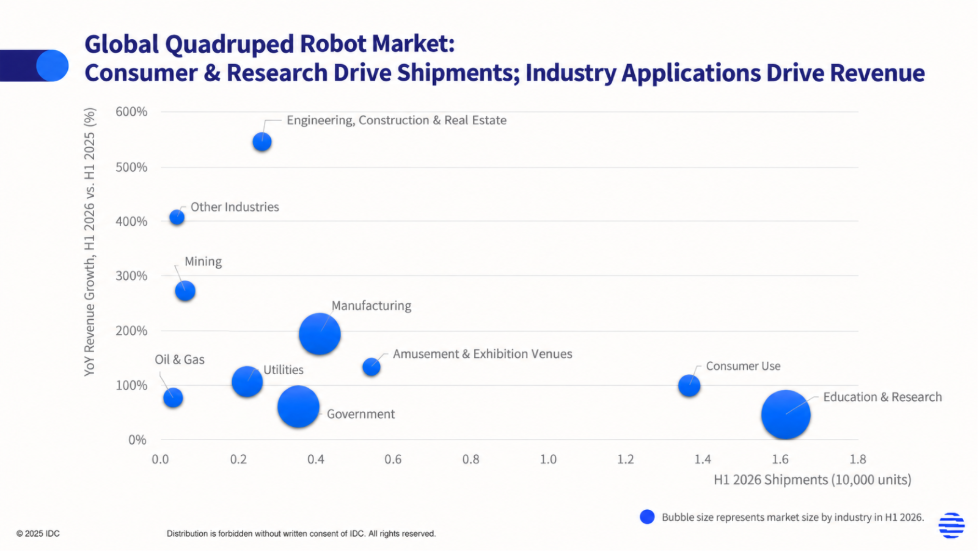

SINGAPORE, SG / ACCESS Newswire / October 30, 2026 / The latest report from International Data Corporation (IDC), Worldwide Quadruped Robot Market Share, 1H26, shows that the global market for quadruped robots used in industrial applications exceeded US$270 million in the first half of 2026, up 125.1% year on year. With extensive deployments in power infrastructure inspection, industrial inspection, and emergency response and firefighting, DEEP Robotics ranked first globally by revenue in quadruped robot industrial applications during the period. This follows Frost & Sullivan’s ranking of DEEP Robotics as the global leader in revenue from quadruped robot industrial applications in 2025.
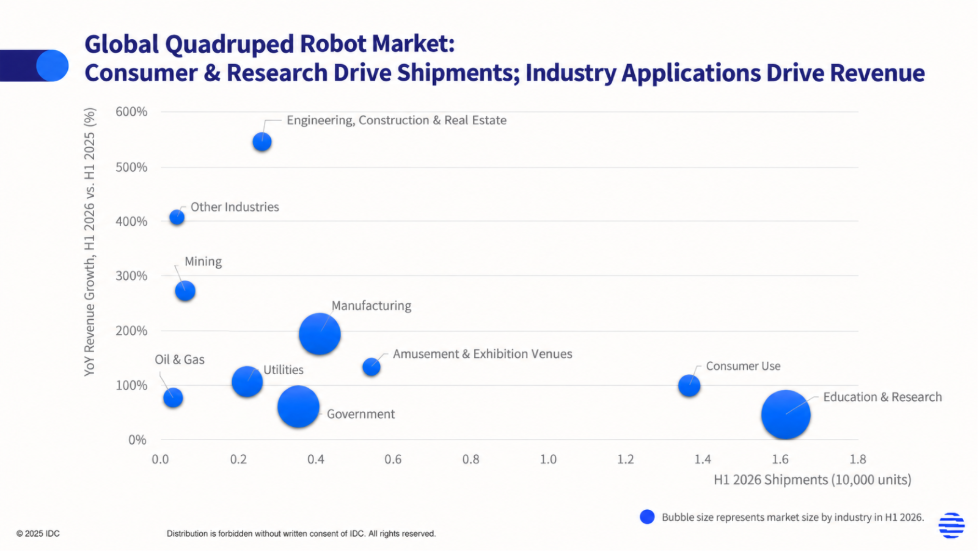
According to IDC, global shipments of quadruped robots, commonly known as robot dogs, exceeded 49,000 units in the first half of 2026, up 92.5% year on year, while total market revenue surpassed US$400 million. However, a clear divergence has emerged between shipment volume and revenue: consumer and research models accounted for approximately 60% of shipments but less than one-third of revenue, while industrial models represented less than 40% of shipments yet generated more than two-thirds of revenue.
DEEP Robotics’ continued leadership reflects more than the persistence of one company’s ranking. It illustrates the quadruped robot industry’s transition from rapid shipment growth to increasingly distinct market segments. As the market expands, competition is shifting toward the ability to deliver results in real operating environments and specialized applications. Can robots operate reliably and consistently in demanding environments such as power facilities, firefighting operations, factories, and mines? Can they integrate into customers’ production workflows? Can suppliers establish delivery models that support repeatable deployments, ongoing maintenance, and measurable returns?
Market Segmentation: Industrial Applications Become a Core Engine of Growth
As quadruped robots move toward deployment at scale, why is such a pronounced gap emerging between shipment volume and revenue? Consumer, education, and research products are becoming more accessible through standardized designs, large-scale manufacturing, and lower costs. The IDC report notes that this segment accounted for most of the growth in global shipments, which totaled approximately 58,000 units in 2025.
Customers in power, firefighting, chemicals, mining, and industrial manufacturing have different priorities. They focus on whether robots can operate around the clock and perform reliably in real operating environments. These requirements are driving quadruped robots for industrial applications toward greater reliability, more advanced intelligence, and higher returns on investment.
These different development paths are clearly reflected in market growth. IDC data shows that, in the first half of 2026, revenue from industrial applications rose 125.1% year on year, while deployments increased by 260.5%. Both growth rates substantially outpaced the overall market. The increasing contribution of practical industrial demand reinforces the role of industrial applications as a major growth engine.
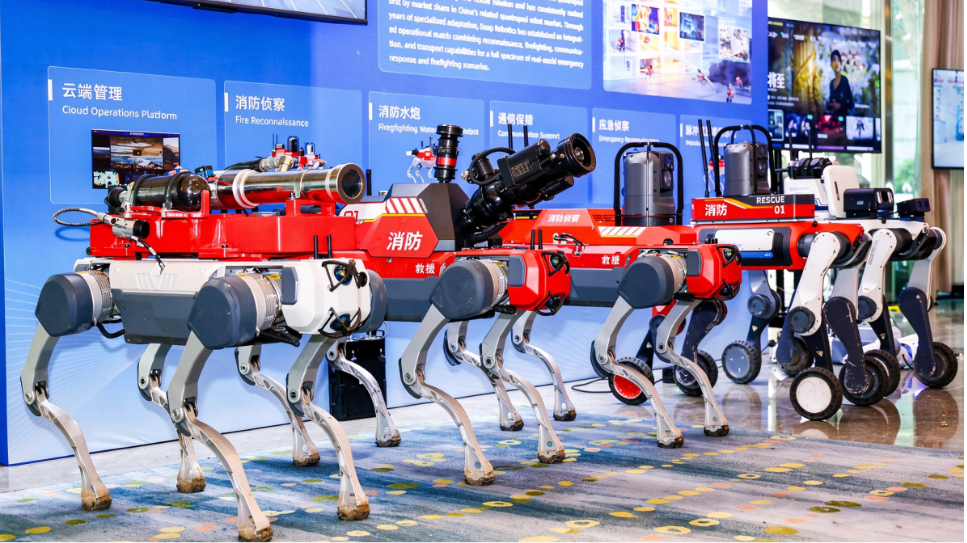
DEEP Robotics, which holds the largest global revenue share in quadruped robot industrial applications, exemplifies this shift. Publicly available data shows that industrial applications consistently accounted for approximately 80% of the company’s core business revenue from 2024 through the first half of 2026. Its leading position is built on a growing portfolio of real-world projects, rather than shipment volume alone.
DEEP Robotics focuses on six key areas: energy and power, emergency response and firefighting, security patrols, industrial operations and maintenance, public services, and education and research. Its continued work in frontline environments has built a distinctive base of practical expertise. This encompasses more than project references: it includes operating methods for complex environments, data on operating conditions, prior knowledge for perception systems, and experience in end-to-end task execution. Together, these capabilities help its robots deliver consistent value across industries.
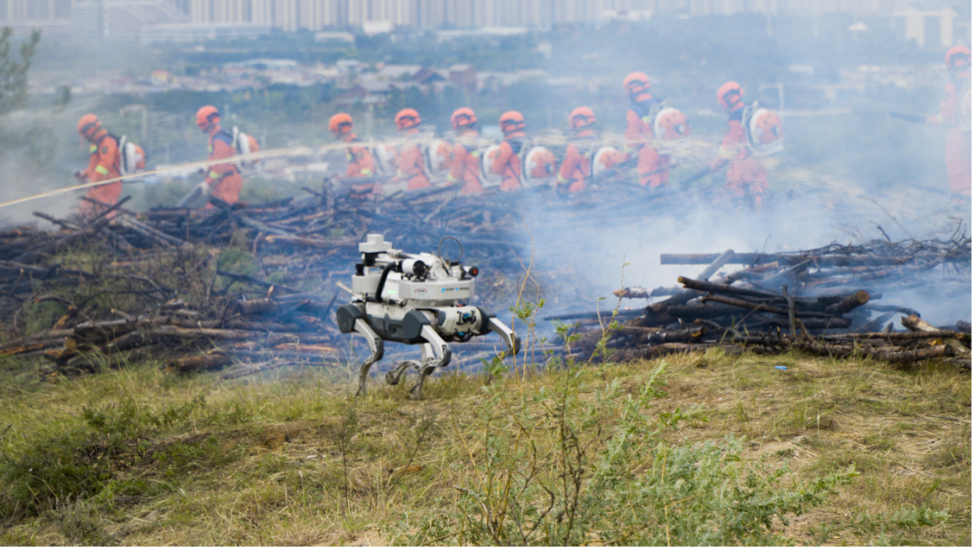
In Singapore’s underground power cable tunnels, autonomous inspections save more than 480 hours of manual inspection work annually. At a warehouse facility in California, a single robot can perform inspection work equivalent to that of three personnel, with alert identification accuracy exceeding 95%. During the “Emergency Mission 2026” flood response exercise, the company’s robots waded through water, negotiated obstacles, and inspected embankments for hidden hazards, taking first place in comparative testing. At the West Lake scenic area, they work alongside police to patrol crowded locations and provide early warnings.
Across these diverse deployments, DEEP Robotics’ robots undertake hazardous and repetitive monitoring and inspection tasks, enabling people and robots to work together. Although the environments and assignments vary, all these projects demonstrate the same essential capability: completing tasks from start to finish. This capability will be central to the industry’s next phase of competition.
The Competitive Focus: From Robot Hardware to End-to-End Task Execution
The IDC report notes that vendors targeting industrial applications need to develop deep expertise in selected use cases, accumulating operational data and practical task experience. They must progress from inspection to active task execution, and from selling products to delivering solutions. For industrial users, the decisive considerations are safety, reliability, and return on investment.
At DEEP Robotics’ ecosystem partner conference this year, founder Zhu Qiuguo identified five integrated capabilities that will define companies’ future competitiveness: hardware platforms, AI agents, application-specific solutions, supply chain ecosystems, and service systems.
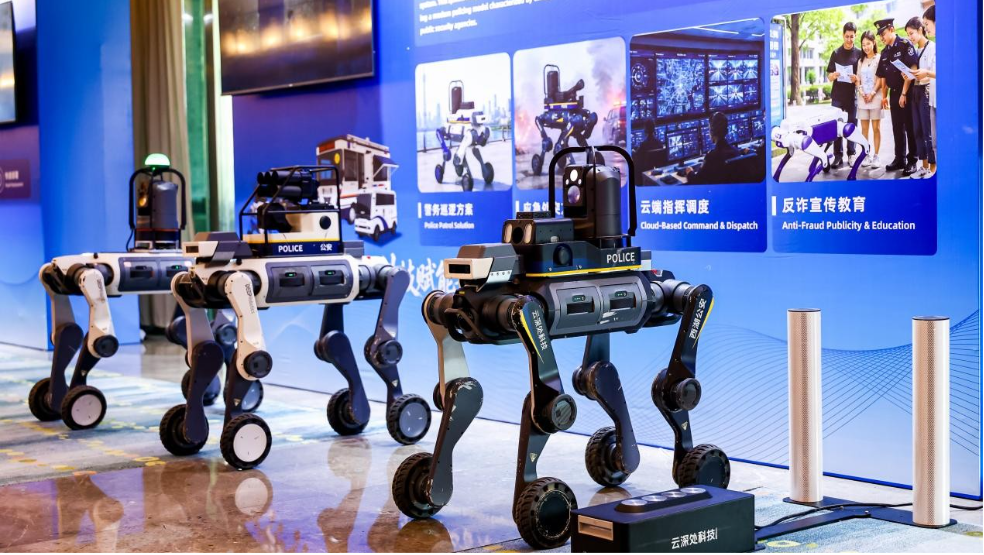
Following this approach, DEEP Robotics draws on extensive deployment experience and a fully in-house technology stack, using modular design to adapt its robots to different applications. It has developed standardized solutions across its six core areas: energy and power, emergency response and firefighting, security patrols, industrial operations and maintenance, public services, and education and research. These ready-to-deploy products reduce the need for customers to undertake additional development. The company has also established a comprehensive service framework covering solution consulting, custom design, deployment and commissioning, training and handover, and ongoing operations and maintenance. This supports high equipment availability throughout long-term operation.

DEEP Robotics’ international business spans 46 countries and regions. The company serves more than 500 industrial and institutional customers, including SP Group, across critical sectors such as energy, telecommunications, and public services. These customers’ continued partnerships and repeat purchases reflect their confidence in the company’s delivery capabilities and product reliability.
The true value of a quadruped robot lies in the environments it can serve, the tasks it can take on, and whether those capabilities can scale from one project to a hundred, or from a single production line to an entire industry. Today’s market combines strong enthusiasm with intense competition over shipment volumes, technical specifications, and emerging trends. As the market matures, however, a fundamental principle will become increasingly clear: deep application expertise and a sustained commitment to development matter more than shipment numbers alone. Competitive advantage will be earned in demanding environments where robots can make the greatest difference. Companies that can put robots to productive use, keep them operating reliably, and deliver measurable value will be best positioned to succeed as deployments scale.
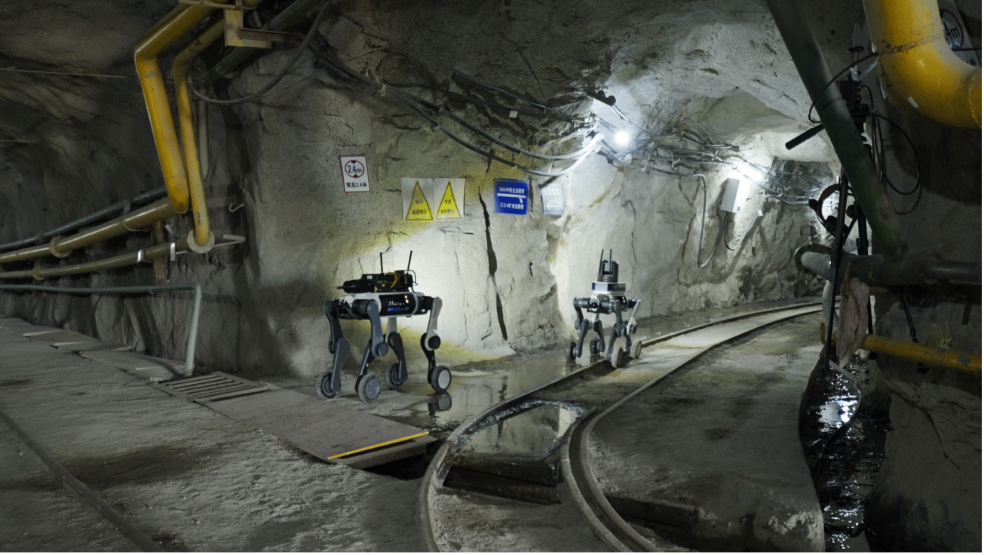
DEEP Robotics exemplifies this approach. It concentrates on practical applications such as power infrastructure inspection, emergency response and firefighting, and industrial operations and maintenance. By developing a thorough understanding of each use case and feeding operational data and experience back into product development, it makes every deployment a foundation for further improvement. Over time, this cumulative learning creates a competitive advantage that is difficult to replicate.
DEEP Robotics’ leading position in the global market for quadruped robot industrial applications marks a milestone in its sustained work on frontline deployments and continuous improvement under real operating conditions. Looking ahead, companies that develop their capabilities through practical industrial applications will be well placed to support broader economic and social progress. By assigning hazardous and repetitive tasks to machines, they can reduce workers’ physical burdens and enable more effective collaboration between people and robots across industries. Technology companies that combine deep application expertise with practical innovation are positioned to create lasting value as the industry develops.
Media Contact:
Company: DEEP Robotics
Contact: Vivian Chen
Email: chenlingjia@deeprobotics.cn
Website: https://www.deeprobotics.cn/en
SOURCE: DEEP Robotics
View the original press release on ACCESS Newswire
