Scrubber System Market Projected to Reach USD 9.72 Billion by 2035, Growing at 7.2% CAGR
Scrubber System Market projected to reach USD 9.72 Billion, at a CAGR of 7.2% during 2026 to 2035 As Per the MRFR
Press Release Disclaimer: This is a press release distributed through the XPR Media network. It has not been independently verified by our newsroom.
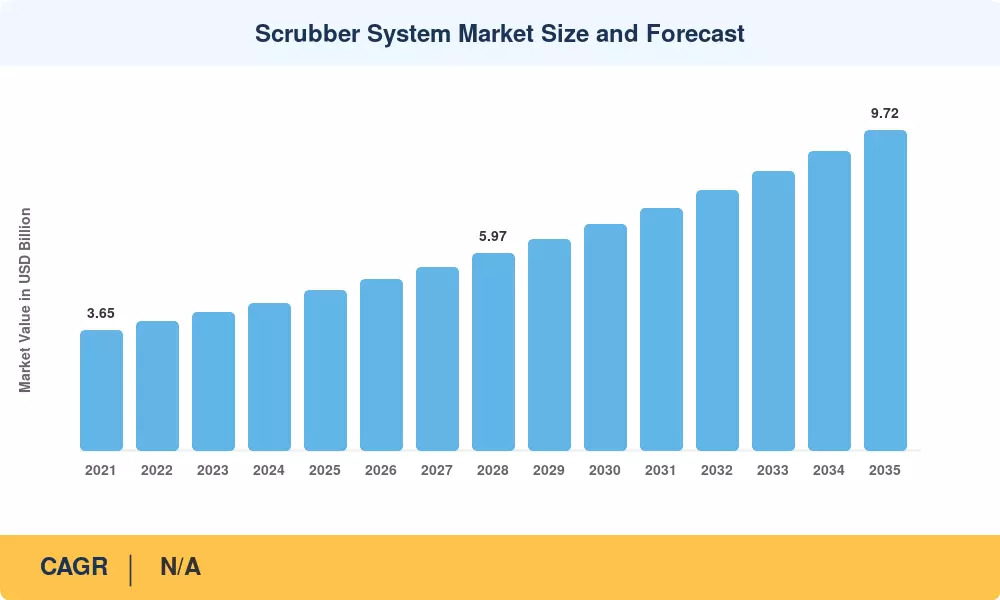

Scrubber System Market projected to reach USD 9.72 Billion, at a CAGR of 7.2% during 2026 to 2035
NEW YORK, NY, UNITED STATES, August 24, 2026 /EINPresswire.com/ — As Per the MRFR Analysis, Scrubber System Market projected to reach USD 9.72 Billion, at a CAGR of 7.2% during 2026 to 2035, driven by Increasing regulatory pressures drive demand for advanced Scrubber System Market solutions in industrial applications.
Market Overview
The Scrubber System Market encompasses a range of air pollution control technologies designed to remove harmful pollutants, particularly sulfur oxides (SOx), particulate matter, acid gases, and heavy metals from industrial exhaust streams. These systems are critical for regulatory compliance across maritime shipping, power generation, chemical processing, cement production, and metal refining industries. Scrubber systems function by contacting polluted gas streams with a scrubbing liquid or dry sorbent to neutralize or capture contaminants before atmospheric release.
Several key drivers are fueling the expansion of the Scrubber System Market. The sustained enforcement of the International Maritime Organization’s global 0.50% sulfur cap on marine fuels, effective since January 2020, remains the single largest demand catalyst, pushing fleet operators toward exhaust gas cleaning retrofits at scale [1]. Additionally, tightening industrial emission standards across major economies, including China’s ultra-low emission mandate for power plants and India’s FGD retrofit requirements for coal-fired thermal stations, are compelling heavy industry to install or upgrade flue gas desulfurization equipment [2].
A generational technology shift is reshaping how both maritime and stationary emission sources manage sulfur oxides and particulate matter. Legacy single-pass open-loop systems are giving way to closed-loop and hybrid configurations that can operate in zero-discharge port zones. On the industrial side, conventional limestone-based scrubbers are being supplemented by advanced semi-dry and circulating dry reactor designs that handle multi-pollutant streams — SOx, HCl, and heavy metals — in a single tower [3][4].
Policy and regulatory influence remains the most significant factor shaping the Scrubber System Market. The EU Emissions Trading System’s extension to maritime shipping, phased in from 2024, has intensified fleet scrutiny on total emission profiles and encouraged integrated scrubber-plus-carbon-capture pilot programs. China’s Ministry of Ecology and Environment mandates that all coal-fired power plants achieve SOx concentrations below 35 mg/m³, and this program is extending to steel, cement, and glass production [5]. India’s Central Pollution Control Board (CPCB) requires all coal-fired power stations to install FGD systems, with staggered deadlines running through 2027 [6].
The demand outlook for the Scrubber System Market remains highly positive. Europe currently dominates with roughly 35% of global revenue, anchored by the North Sea and Baltic Sulfur Emission Control Areas (SECAs) and the EU ETS maritime inclusion. Asia-Pacific is the fastest-growing region at an estimated 8.9% CAGR, propelled by China’s ultra-low emission mandate and India’s coal fleet expansion. The convergence of decarbonization policy and air quality regulation will keep scrubber demand elevated well into the 2030s.
📍 Get Free Sample Report for Detailed Market Insights:
https://www.marketresearchfuture.com/sample_request/6660
Market Segmentation
By Technology
The Scrubber System Market is segmented into Wet Scrubbers, Dry Scrubbers, and Electrostatic Precipitators (integrated systems). Wet scrubbers command the largest technology share at approximately 58% of 2025 revenue, reflecting decades of deployment in both marine and industrial settings [7]. Their high SOx removal efficiency (typically 95–99%) and relatively straightforward engineering make them the backbone of the market. Open-loop variants dominate ocean-going vessel installations, while closed-loop systems are increasingly specified for vessels trading in restricted discharge zones [3].
Dry and semi-dry scrubber technologies are forecast to register the fastest segment CAGR of 8.6% through 2035, gaining ground in water-scarce inland regions and applications requiring multi-pollutant control. Spray dryer absorbers and circulating dry reactors handle SOx and HCl simultaneously, making them attractive for coal-fired power plants in India, the Middle East, and inland China. Their lower water consumption — roughly 50–70% less than wet systems — positions them favorably as water-stress concerns intensify globally [8].
By Application
The market serves Marine, Industrial Power Generation, Chemical & Petrochemical, Cement & Metals, and Other Industrial applications. Marine applications account for an estimated 44% share of the Scrubber System Market, sustained by ongoing newbuild installations and retrofit demand for over 5,500 vessels fitted with exhaust gas cleaning systems by mid-2025 [3]. Industrial power generation represents the second-largest application, valued at approximately USD 1.26 billion in 2025, driven by FGD mandates in China, India, and the United States [2][6]. Chemical and petrochemical facilities are growing at a projected 7.8% CAGR as tighter acid gas regulations expand scrubber adoption.
By Configuration (Marine Segment)
The marine segment is categorized into Open-Loop, Closed-Loop, and Hybrid configurations. Open-loop systems still account for approximately 52% of marine installations, owing to their simpler design and lower upfront cost — typically USD 1.5–3 million for a mid-size vessel [3]. However, more than 50 ports worldwide have prohibited or restricted open-loop scrubber discharges, driving demand for closed-loop and hybrid units. Hybrid systems, which can switch between open and closed modes, are the fastest-growing configuration with a projected 9.4% CAGR, as shipowners increasingly view the 25–40% cost premium over open-loop as insurance against regulatory risk [9].
By End User
The Scrubber System Market serves shipowners and operators, power generation utilities, chemical and petrochemical companies, cement and metal producers, and other heavy industrial operators. The shipping industry remains the largest end-user segment, with retrofit activity shifting from large crude carriers toward mid-size bulk and product tankers as fuel-cost savings justify the capital outlay [3]. Industrial power generation represents the second-largest end-user group, particularly in Asia-Pacific where coal-fired capacity continues to expand alongside emission control requirements [2][5].
🛒 You can buy this market report at:
https://www.marketresearchfuture.com/checkout?currency=one_user-USD&report_id=6660
Regional Analysis
Europe
Europe commands the largest share of the Scrubber System Market at approximately 35% of global revenue, built on the world’s most stringent maritime and industrial emission frameworks. The Baltic and North Sea SECAs have operated with a 0.10% sulfur limit since 2015, a decade ahead of global standards [7]. Germany and the Netherlands serve as scrubber manufacturing and retrofit hubs, while Scandinavian shipowners were early adopters of hybrid configurations. The EU ETS maritime inclusion, covering 40% of verified emissions from intra-EU voyages in 2024 and ramping to 100% by 2026, has further accelerated scrubber adoption [10]. The proposed Mediterranean SECA, if adopted by 2027, would extend compliance requirements to an additional 15,000-plus vessel transits annually [7].
Asia-Pacific
Asia-Pacific is the fastest-growing region in the Scrubber System Market, projected to reach approximately USD 4.12 billion by 2035, driven by China and India emission mandates [2][5]. China alone accounts for approximately 42% of regional share, with its Domestic Emission Control Areas covering the Bohai Sea, Yangtze River Delta, and Pearl River Delta requiring vessels to burn fuel with no more than 0.50% sulfur while in port. China’s ultra-low emission program for stationary sources has retrofitted over 1,050 GW of coal capacity with compliant FGD scrubbers, and the program is extending to steel, cement, and glass production [5]. India represents the region’s most significant greenfield opportunity, with approximately 75 GW of coal capacity still awaiting FGD commissioning as of early 2025, representing a procurement pipeline valued at roughly USD 4.5 billion for equipment and installation combined [6].
North America
North America holds the second-largest regional share at approximately 20%, supported by EPA Clean Air Act enforcement and Canadian SECA compliance. The United States accounts for the bulk of regional revenue, driven by EPA Mercury and Air Toxics Standards (MATS) for power plants and the North American ECA for coastal shipping [11]. The Great Lakes region has seen accelerated scrubber retrofit activity as vessel operators serving inland waterways face limited access to low-sulfur bunker fuel. Canadian demand centers on oil sands operations where wet scrubber systems manage SO₂ and particulate emissions from upgrader stacks [12].
Rest of the World
The Middle East and Africa region is forecast to grow at a 7.5% CAGR as refinery and desalination plant investments accelerate. Saudi Arabia and the UAE are driving regional demand through refinery expansion and petrochemical complex development, with Fujairah emerging as a regional scrubber retrofit hub for vessels transiting the Suez Canal [13]. South America, led by Brazil’s thermoelectric fleet and Chile’s copper smelting industry, represents a growing but relatively nascent market, expanding as environmental enforcement strengthens [6].
Competitive Landscape / Key Players
The Scrubber System Market exhibits moderate concentration, with the top five players commanding roughly 40–48% of global revenue. Key players include Wärtsilä, Alfa Laval, Yara Marine Technologies, Andritz AG, Babcock & Wilcox, CR Ocean Engineering, Fuji Electric, Langh Tech, Mitsubishi Power, and Dürr Group [14].
Wärtsilä is an integrated marine solutions leader with an estimated 8–11% revenue share, offering open/closed/hybrid marine scrubbers with digital monitoring capabilities. Alfa Laval, holding 7–10% share, provides PureSOx hybrid scrubbers with in-line monitoring and strong retrofit and aftermarket presence. Yara Marine Technologies (6–9% share) is a pure-play marine exhaust gas cleaning specialist offering SOx and PM scrubber compliance packages. Andritz AG (5–8% share) focuses on industrial FGD wet and dry systems, serving pulp, power, and metals industries. Babcock & Wilcox (4–7% share) provides wet FGD and dry sorbent injection systems with a U.S. power generation focus [14].
Strategic developments in the Scrubber System Market include product launches and regulatory certifications. In November 2023, Andritz AG commissioned a semi-dry scrubber system at a cement kiln in Turkey, demonstrating 97% SO₂ removal at water consumption rates 60% below conventional wet systems [12]. In September 2023, DNV published updated class notation rules for hybrid scrubber systems, requiring enhanced washwater treatment documentation for vessels seeking DNV compliance certification [9].
Latest Industry News & Developments
China MEE (June 2024): Issued Phase III ultra-low emission guidelines extending scrubber requirements to steel and cement plants with capacity above specified thresholds, significantly expanding the addressable industrial base for the Scrubber System Market [5].
IMO Marine Environment Protection Committee (2024): Continued evaluation of new Emission Control Areas, including the Mediterranean, which could add an estimated 8,000 additional vessel transits per year requiring compliant exhaust gas cleaning [7].
Vallourec (September 2025): Secured a major contract from Petrobras to supply OCTG products and services for offshore operations, highlighting the continued investment in emission control infrastructure across the oil and gas sector.
Market Challenges & Opportunities
Challenges
The Scrubber System Market faces several notable challenges. Port-level discharge restrictions represent a significant restraint, with more than 50 ports worldwide, including Singapore, Fujairah, and important Chinese coastal ports, prohibiting or restricting open-loop scrubber discharges [9]. The uncoordinated regulatory environment complicates operational planning for shipowners and increases demand for more expensive closed-loop and hybrid units, rising overall system costs by 25–40% over open-loop alternatives [3].
High retrofit capital costs for older vessels and the growth of LNG and methanol as alternative compliance paths present additional challenges. LNG-fueled newbuilds accounted for approximately 30% of gross tonnage ordered in 2024, while methanol dual-fuel engines are gaining traction, particularly in the container segment [15]. Each LNG or methanol vessel that enters service without a scrubber represents displaced equipment demand. Water scarcity limiting wet scrubber use in inland regions and regulatory uncertainty on washwater chemistry further challenge market growth [9].
Opportunities
Significant opportunities exist in the Scrubber System Market. Hybrid and multi-pollutant scrubber systems are gaining traction as regulatory convergence in SOx, NOx, particulate matter, and increasingly greenhouse gases stimulates demand for integrated abatement towers [16]. Equipment makers that combine scrubbing, selective catalytic reduction, and carbon-capture modules into a single footprint can charge a premium and cut shipyard installation by 30–40%.
Emerging market industrialization presents a major growth corridor. Through 2030, India, Vietnam, Indonesia, and Bangladesh combined are adding more than 120 GW of coal and heavy-industry capacity, most of which will need emissions control equipment that meets increasingly stringent national standards [6][13]. The Scrubber System Market opportunity in these geographies is forecast to reach over USD 3 billion in cumulative opportunity through 2035.
Digital monitoring and predictive maintenance represent another key opportunity. Scrubber OEMs are embedding IoT sensors and cloud-based analytics platforms into their systems to offer continuous emission monitoring, reagent optimization, and predictive maintenance scheduling [17]. These digital overlays create recurring service revenue streams — estimated at 8–12% of initial equipment value annually — and improve compliance documentation for flag-state inspections.
Scrubber-based carbon capture pilots are emerging as a transformative opportunity. Several European maritime research consortia are testing seawater-based CO₂ absorption integrated with existing scrubber infrastructure. If proven commercially viable, this could transform installed scrubber systems into carbon-capture assets, dramatically expanding their value proposition and extending equipment lifetimes. Pilot results expected by 2028 could unlock a new revenue layer for the Scrubber System Market [18].
To explore more market insights, visit us at:
https://www.marketresearchfuture.com/reports/scrubber-system-market-6660
Final Market Summary
The Scrubber System Market is poised for substantial growth, projected to reach USD 9.72 billion by 2035, driven by increasing regulatory pressures across maritime and industrial sectors. Europe maintains its dominant position, while Asia-Pacific emerges as the fastest-growing region, fueled by China’s ultra-low emission mandates and India’s coal fleet FGD requirements. Technological innovation, including hybrid configurations, dry scrubber systems, and digital monitoring platforms, is reshaping the competitive landscape, enabling operators to navigate complex regulatory environments more effectively. The market’s long-term potential remains strong, supported by the convergence of decarbonization policy and air quality regulation, with emerging opportunities in carbon capture integration and emerging market industrialization ensuring sustained demand well into the 2030s.
More Related Reports from MRFR Library:
Water Desalination Market: https://www.marketresearchfuture.com/reports/water-desalination-market-11785
Hydrogen Market: https://www.marketresearchfuture.com/reports/hydrogen-market-12306
Electrolyzer Market: https://www.marketresearchfuture.com/reports/electrolyzers-market-12343
Nuclear Power Plant Equipment Market: https://www.marketresearchfuture.com/reports/nuclear-power-plant-equipment-market-12346
Carbon Offset Carbon Credit Market: https://www.marketresearchfuture.com/reports/carbon-offset-carbon-credit-market-12447
UAE Green Hydrogen Market: https://www.marketresearchfuture.com/reports/uae-green-hydrogen-market-13881
Maritime Decarbonization Market: https://www.marketresearchfuture.com/reports/maritime-decarbonization-market-13899
Europe Battery Energy Storage System Market: https://www.marketresearchfuture.com/reports/europe-battery-energy-storage-system-market-13948
Saltwater Batteries Market: https://www.marketresearchfuture.com/reports/saltwater-batteries-market-13975
North America Transformer Market: https://www.marketresearchfuture.com/reports/north-america-transformer-market-16068
Larry Wilson
WantStats Research And Media Pvt. Ltd.
+ +1 855-661-4441
email us here
Visit us on social media:
LinkedIn
Facebook
YouTube
X
Legal Disclaimer:
EIN Presswire provides this news content “as is” without warranty of any kind. We do not accept any responsibility or liability
for the accuracy, content, images, videos, licenses, completeness, legality, or reliability of the information contained in this
article. If you have any complaints or copyright issues related to this article, kindly contact the author above.

Media gallery